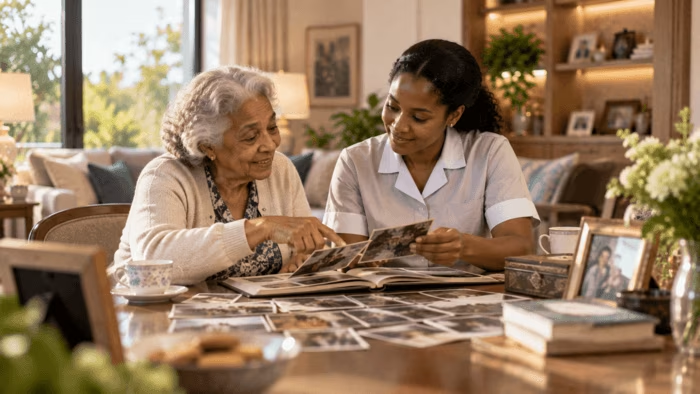
Two households may both request an elderly caregiver while expecting very different kinds of daily support.
One person may mainly need companionship and routine reminders. Another may require regular help with movement, dressing, meals, or getting safely around the home.
That difference should shape the shortlist from the beginning.
💡 Direct Answer: The right caregiver profile depends on the person’s actual daily support needs, not on the job title alone.
My Agency works with overseas partners and international recruitment agencies in Ethiopia to build candidate routes around the real care environment before profiles are presented.
👵 Three Care Environments Need Different Profiles
Elderly support is not one fixed type of work.
The level of independence, mobility, daily routine, and companionship required can significantly change the candidate profile.
Scenario 1 — Companionship-Led Support
Some elderly people remain largely independent but benefit from regular presence and structured support.
The role may emphasize:
-
Companionship
-
Conversation
-
Routine reminders
-
Light daily assistance
-
Patience
-
Respectful communication
-
Following established household routines
In this setting, interpersonal qualities may be just as important as practical assistance.
Scenario 2 — Routine Daily Assistance
Another household may need more consistent practical support.
The caregiver may assist with:
-
Dressing routines
-
Meal-related support
-
Daily organization
-
Scheduled reminders
-
Light walking assistance
-
Maintaining a predictable routine
-
Following family instructions
The candidate should be comfortable supporting daily activities without unnecessarily taking over tasks the elderly person can still manage independently.
Scenario 3 — Mobility-Support Household
Some roles require greater attention to physical assistance.
The profile may place more emphasis on:
-
Safe movement support
-
Helping with transfers
-
Walking assistance
-
Understanding physical limitations
-
Calm and patient handling
-
Following household guidance
-
Knowing when additional help is needed
The level of assistance should influence candidate selection before the shortlist is built.
🛡️ Previous Care Experience Needs the Right Context
A statement such as “elderly care experience” is only a starting point.
The useful questions are more specific.
Through Vetting & Background Checks, relevant review may consider:
-
Previous caregiver roles
-
Type of elderly person supported
-
Level of mobility involved
-
Daily responsibilities
-
Length of previous assignments
-
Household setting
-
References where available
-
Gaps or unclear employment claims
-
Whether stated duties match the actual experience described
A candidate who previously supported an independent senior may have a very different background from someone experienced with regular mobility assistance.
📌 Key Point: Previous experience becomes more useful when the partner knows what kind of care environment produced that experience.
🤝 Companionship Is a Core Part of Good Care
Practical tasks matter, but elderly support is not only a task list.
Companionship may involve:
-
Being present
-
Listening
-
Maintaining respectful conversation
-
Following familiar routines
-
Showing patience
-
Supporting everyday social interaction
-
Recognizing when the person needs reassurance or family attention
A caregiver who completes every practical task but ignores the person behind the routine may still be a poor fit.
Good daily support combines reliability with respectful human interaction.
⚠️ Keep the Role Clearly Non-Clinical
Elderly caregivers supplied through this category are prepared for non-clinical daily support.
Their role may include:
-
Mobility assistance
-
Routine reminders
-
Medication-schedule reminders
-
Companionship
-
Meal-related support
-
General daily assistance
Their role should not be described as including:
-
Medical diagnosis
-
Nursing procedures
-
Injections
-
Clinical monitoring
-
Prescribing medication
-
Medication administration
-
Treatment decisions
A caregiver may remind the elderly person that it is time for medication when this is part of the agreed routine.
That is different from deciding what medication should be taken or administering clinical treatment.
⚠️ Important: An elderly caregiver supports daily living and companionship. She should not be presented as a nurse or medical professional.
📊 Care Environment and Candidate Route
| Care Environment | Candidate Priority | Vetting Focus | Support Emphasis | Preparation |
|---|---|---|---|---|
| Companionship-led | Patience and communication | Previous companionship roles | Presence and routine | Communication and household routine |
| Routine assistance | Reliability and organization | Daily-support experience | Meals, reminders, daily activities | Practical routine support |
| Mobility-support household | Safe assistance and calm handling | Relevant mobility experience | Movement and transfers | Safe non-clinical support |
| Partner-defined setting | Requirement-specific profile | Role-led checks | Agreed support level | Targeted preparation |
This approach helps elderly caregiver suppliers in Ethiopia build shortlists around the actual support environment rather than presenting one general caregiver profile for every request.
🌍 Receiving Markets Add Context to the Requirement
Care expectations can vary between households, partners, and receiving markets.
For recruitment partners serving GCC markets, including Qatar, household routines, family involvement, accommodation arrangements, and the expected level of daily assistance can all influence candidate suitability.
The destination provides useful context.
However, the actual care environment remains more important than the country name alone.
A companionship-led role and a mobility-support role in the same market may still require very different candidates.
📄 The Care Requirement Should Be Documented Clearly
Ambiguous role descriptions can create problems after selection.
Through Documentation & Compliance, the agreed role can be recorded more clearly before the candidate proceeds.
Useful details may include:
-
Expected daily duties
-
Mobility requirements
-
Level of independence
-
Companionship expectations
-
Routine reminder requirements
-
Medication-reminder boundaries
-
Household instructions
-
Previous experience requested
-
Agreed role limitations
Clear documentation helps prevent a non-clinical support role from gradually being treated as something more advanced.
It also gives the candidate and partner a more consistent understanding of the assignment.
🔄 Care Needs Can Change Over Time
An elderly person’s daily support requirement may change.
Examples include:
-
Companionship develops into regular mobility support
-
An independent person begins needing more daily assistance
-
Occasional reminders become part of a structured routine
-
Household responsibilities expand significantly
-
Physical assistance becomes more frequent
A substantial change should trigger a new suitability review.
🔴 Route Rule: Do not assume the original caregiver profile remains suitable when the level of care changes materially.
The same caregiver may still be appropriate.
But the new responsibilities should be assessed rather than added automatically.
🧠 Good Judgment Matters in Everyday Care
A caregiver should also understand when to manage a routine situation and when to involve the family.
Good judgment includes knowing when to:
-
Continue a familiar routine
-
Ask for instructions
-
Report an unusual change
-
Stop an activity that no longer appears safe
-
Seek help from the responsible family member
-
Avoid making decisions outside the agreed role
This is especially important in mobility-related support.
The caregiver should not guess when a situation moves beyond her preparation or responsibility.
Knowing when to ask for help is part of safe non-clinical support.
🧭 Caregivers Are a Distinct Workforce Category
Elderly caregivers form a separate category within our Ethiopian workforce categories.
They should not be treated as general housemaids with a few elderly-care tasks added to the role.
Caregiver selection requires additional attention to:
-
Relevant previous experience
-
Patience
-
Communication
-
Mobility support
-
Daily routine
-
Companionship
-
Role boundaries
-
Household expectations
Keeping the category distinct helps partners compare candidates more accurately.
It also makes the support level clearer before selection.
❓ Frequently Asked Questions
-
What information helps elderly caregiver suppliers in Ethiopia shortlist more accurately?
Mobility level, daily routine, companionship needs, household expectations, previous relevant experience, and the level of independence are the most useful details.
-
Is an elderly caregiver the same as a nurse?
No. This is a non-clinical role focused on everyday assistance, companionship, mobility support, reminders, and household routines rather than nursing or medical treatment.
-
Can a caregiver remind someone about medication?
Yes, when medication reminders are part of the agreed routine. This should not be confused with prescribing, changing, or clinically administering medication.
-
Why does previous caregiver experience need more detail?
Because supporting an independent elderly person differs from assisting someone who needs regular mobility help or more structured daily support.
-
Can a partner request a caregiver with experience in a similar setting?
Yes. The candidate route can prioritize relevant previous experience when the partner clearly describes the care environment and expected duties.
-
What happens if the care requirement changes after shortlisting?
The candidate should be reviewed again when new duties materially change the type or level of support expected.
📩 Start With the Real Care Requirement
Send My Agency the mobility level, daily routine, companionship needs, expected responsibilities, previous experience preferred, and required candidate volume.
We will adapt sourcing, vetting, and documentation around the actual non-clinical care environment.
Contact My Agency to send your caregiver requirement.